
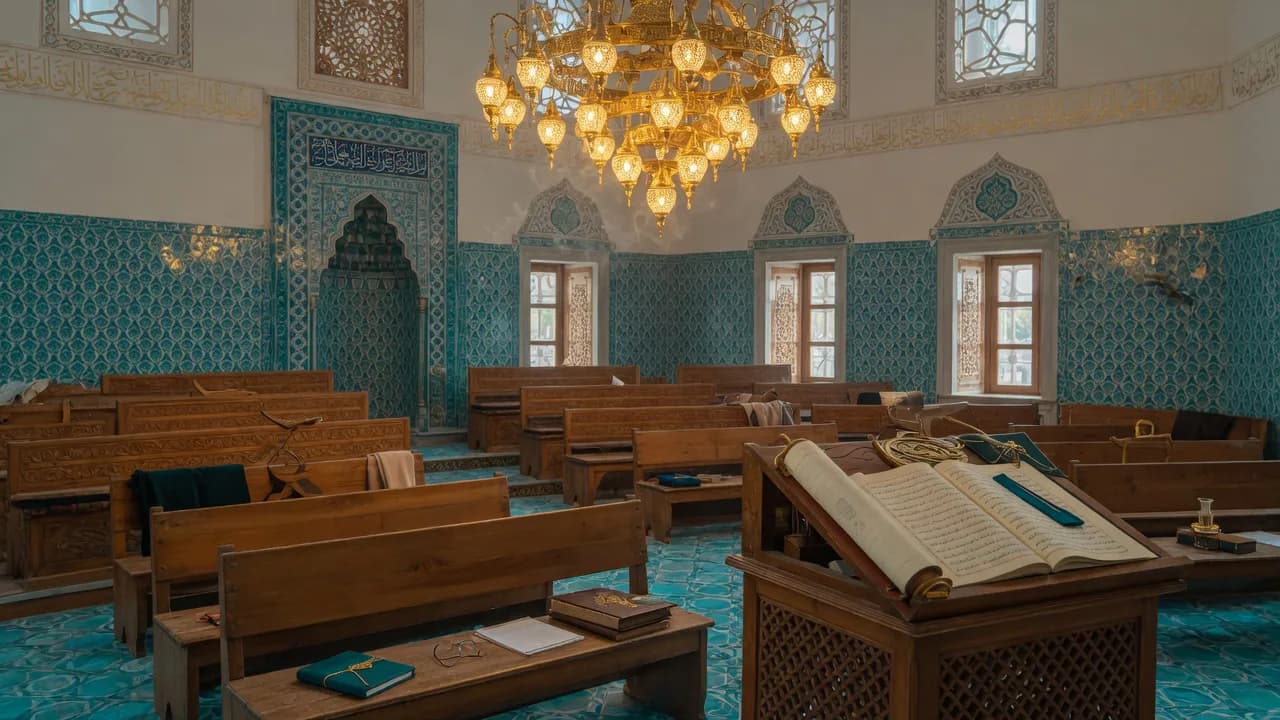
Knowledge is not an accumulation acquired in isolation; it lives, develops, and is transmitted from generation to generation within a community of scholars. In the classical madrasa tradition, lessons, debates, and scholarly discussions formed the foundation of this community consciousness. Today, DİDAR Academy continues this tradition in a modern educational setting through academic seminars. Regularly held seminars enable students to go beyond the curriculum, participate in academic discussions on current and classical topics, and become active members of the scholarly community.
The primary role of academic seminars in education is to broaden the student's horizons. The four-year curriculum is systematic and comprehensive; however, not every aspect of every topic can be covered within the allocated curriculum hours. Seminars provide a platform for deepening topics covered in the curriculum, presenting insights from different disciplines, and discussing current issues from an academic perspective. By attending seminars in Qur'anic exegesis, Hadith studies, Islamic jurisprudence, or Islamic theology, students gain a broader understanding of the landscape of knowledge.
The second role is to strengthen community consciousness. At DİDAR, seminars are not merely in a lecturer-led format; they are organized as interactive sessions where students ask questions, participate in discussions, and share their ideas. High school and university students meet in the same seminar hall; young people from different age and experience levels speak a common academic language. This environment accelerates the student's transformation from an individual learner to a part of the scholarly community.
Academic seminars are a natural extension of the discipline of study and discussion. Before a seminar, students are expected to do preliminary reading on the topic, which reinforces the habit of study. After the seminar, discussion groups evaluate the topic from different perspectives. Book analyses and seminars complement each other; students deepen their understanding of specific works and broaden their knowledge of topics. In DİDAR's educational model, these three activities—study, book analysis, and seminars—form a mutually supportive whole.
Seminars also shape the student's academic stance. Asking questions, raising objections, and listening to different viewpoints in a seminar setting are fundamental to academic maturity. Students do not merely memorize correct answers; they learn how to approach an issue, evaluate evidence, and respectfully engage with different opinions. This skill is of great value in future academic work, education, and social responsibility.
Seminars held at DİDAR Academy's four branches—Istanbul Anatolian, Istanbul European, Kayseri, and Kocaeli—ensure that students from different geographical areas share the same academic culture. Full-time and distance learning students can attend seminars according to their schedules. The flexible educational model also supports seminar participation; students enrich their scholarly journey with extracurricular activities.
Parents and families can also follow the role of seminars in the educational process. DİDAR records educational activities and provides regular feedback to parents. Student seminar participation, academic knowledge, and discussion skills are part of the progress tracking. This transparency allows families to confidently support young people on their scholarly journey.
The selection of topics for academic seminars is also aligned with educational goals. Current issues, excerpts from classical texts, discussions of schools of thought and methodologies, or Arabic language matters may be among the seminar topics. Students prepare for the session by completing the assigned reading list before the seminar. This preparation process is a prerequisite for transitioning from passive listening to active participation and strengthens the discipline of study. Writing a brief summary after the seminar is one of the effective ways to consolidate what has been learned.
In conclusion, academic seminars are one of the most effective ways DİDAR Academy strengthens its scholarly community. Seminars broaden students' horizons, reinforce community consciousness, support the culture of study and discussion, and shape academic attitudes. The curriculum lays the foundation of knowledge; seminars build upon this foundation with academic discussion and community experience. Every young person aspiring to pursue knowledge greatly benefits from the vibrant and dynamic environment offered by the seminar culture.