
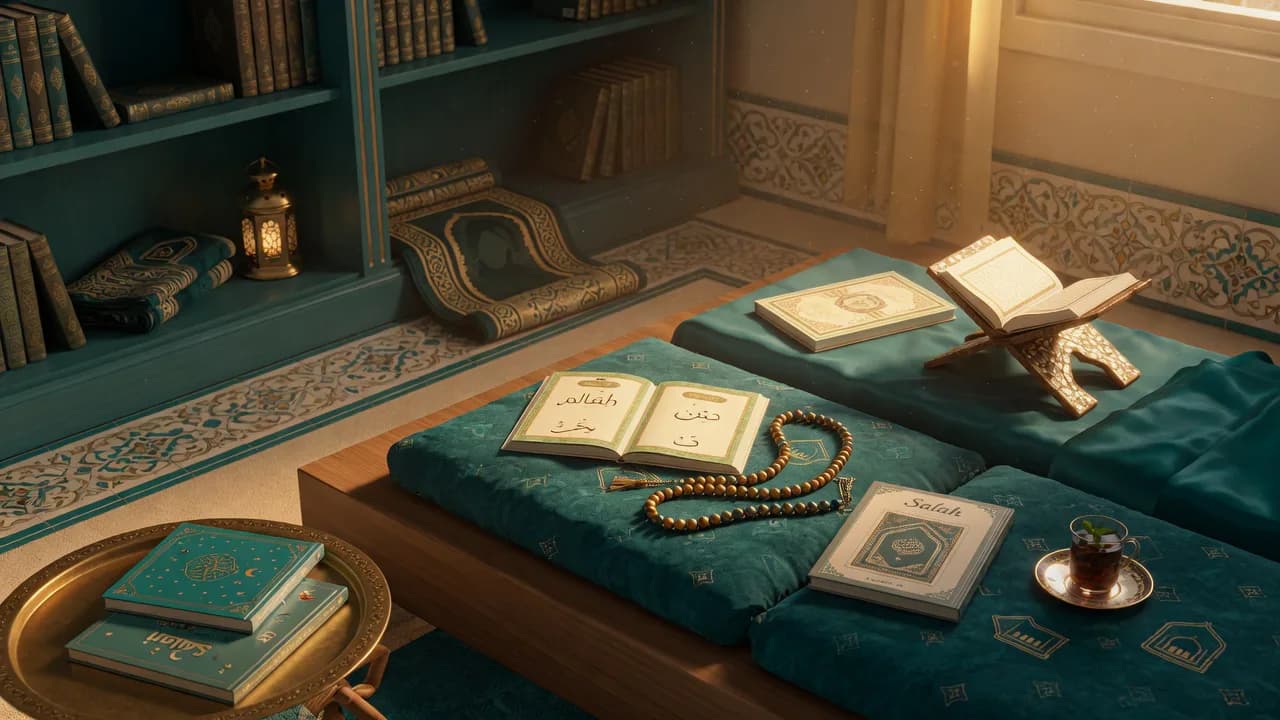
The pursuit of knowledge is not a process limited solely to the student's attendance in classes. Especially for young people in high school and university, the family's attitude, motivation, and support play a decisive role in their journey of knowledge. DİDAR Academy's educational model centers the student while also viewing parent relationships as an integral part of the process. How you provide guidance on your child's journey, from the Arabic preparatory program to Islamic sciences education, directly affects the sustainability of their education.
The first step in parental support is intention. Rather than viewing Islamic sciences education merely as a means to academic success, it should be considered an investment that contributes to your child's spiritual and moral development. Among DİDAR Academy's aims and objectives is to raise equipped individuals who prioritize community consciousness and can assume responsibility in society. A family environment aligned with this goal transforms the student's pursuit of knowledge from a temporary hobby into a lasting life choice. When respect for knowledge, reverence for books, and regular study habits are encouraged at home, the student integrates the discipline from the institution with the atmosphere at home.
The second step is to set realistic expectations. DİDAR's four-year curriculum is systematic and intensive; the first year involves an Arabic preparatory program, followed by classical text readings in Qur'anic exegesis, Hadith studies, Islamic jurisprudence, Islamic theology, and spiritual refinement in subsequent years. It is natural for students to face challenges during this process. As a parent, it is important to offer patient encouragement instead of hasty pressure, listen to your child's difficulties, and trust the institution's guidance system. At DİDAR, progress tracking and qualitative assessment practices ensure that students are monitored not only by exam scores but also by multi-dimensional criteria such as study discipline, class participation, and scholarly accumulation.
The third step is to maintain regular communication with the institution. DİDAR Academy records every step of the educational process and provides transparent feedback to parents. Knowing which texts your child is reading, how they participate in discussion groups, and in which areas they need support helps you ask the right questions at home. Visiting the center to see the educational environment firsthand, meeting the teaching staff, and learning about the curriculum strengthens parental trust. Communication should be maintained regularly, not just when problems arise.
The fourth step is to support a culture of study and discussion at home. The daily study and discussion sessions at DİDAR are the primary way for students to reinforce what they learn in classes. As a parent, providing your child with a quiet and distraction-free study area, limiting phone use at certain times, and helping them maintain a regular sleep-study balance contributes greatly. Asking about the day's lesson topics in short conversations at home and encouraging the student to summarize what they have learned helps extend the culture of discussion to the family environment.
The fifth step is to help the student balance their school or faculty program with their Islamic sciences education. DİDAR offers a flexible yet disciplined system for students in formal high school, open high school, formal university, and open university faculties. As a parent, planning your child's weekly schedule together, clarifying which hours will be dedicated to DİDAR classes and which to school assignments, increases efficiency. Especially for students of theology faculties, the Academic Support program provides a foundation for faculty courses and the DİDAR curriculum to complement each other; the parent's understanding of this integration boosts the student's motivation.
The sixth step is not to neglect the dimension of ethics and upbringing. The pursuit of knowledge is not just about accumulating information but about character building. At DİDAR, ethical texts like Riyâzü's-Sâlihîn are read, and social and spiritual aspects are developed through extracurricular activities. As a parent, observing whether your child reflects the knowledge they acquire in their daily life and ensuring that values such as respect, patience, and responsibility are lived out at home increases the permanence of their education. The awareness that knowledge and ethics are an inseparable whole should also be maintained in the family environment.
In conclusion, a parent is not merely an observer but an active partner in the journey of knowledge. Right intention, realistic expectations, communication with the institution, support for study at home, program balance, and ethical guidance—when these elements come together, your child will gain the maximum benefit from the systematic education offered by DİDAR Academy. With over a decade of experience, DİDAR views parent-student-institution cooperation as one of the cornerstones of its educational model. Your support in your child's journey to become a person of knowledge is one of the strongest pillars of this journey.