
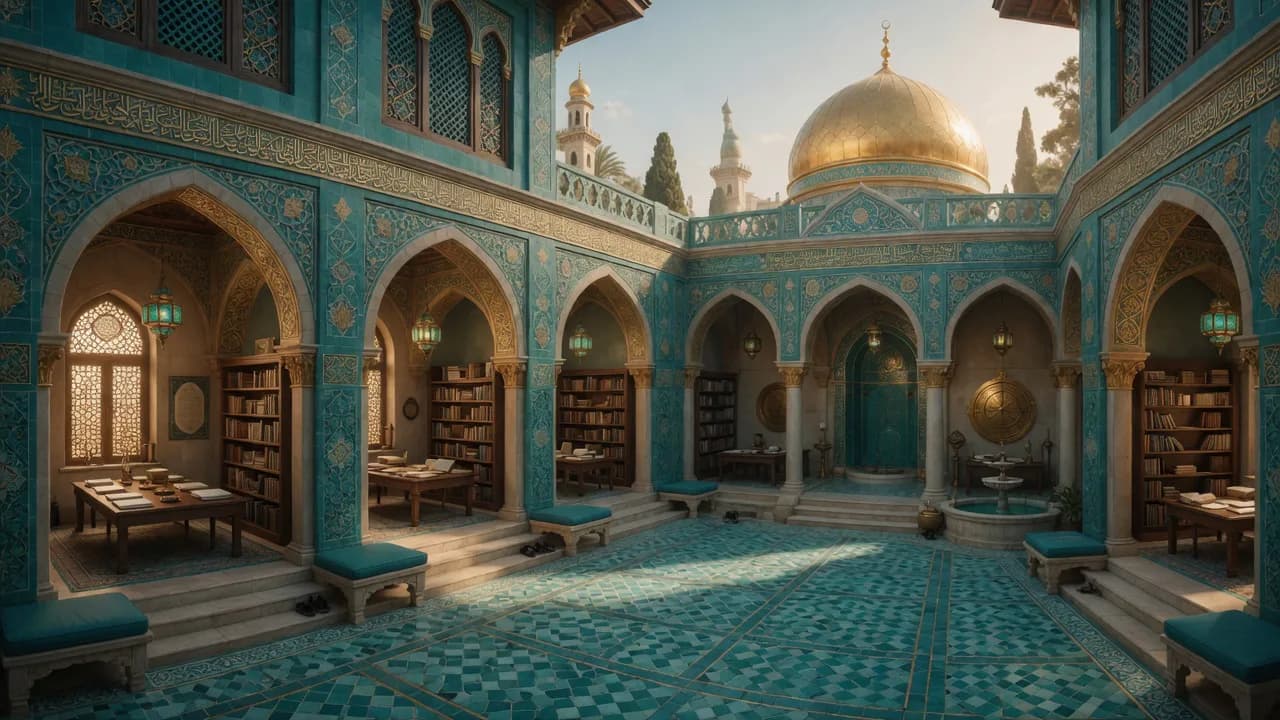
With over a decade of experience, DİDAR Academy offers Arabic and Islamic studies education through its four branches spread across different regions of Turkey. The Istanbul Anatolian, Istanbul European, Kayseri, and Kocaeli centers operate with the same curriculum, educational model, and quality standards. This structure allows the pursuit of knowledge to reach young people across a wide geographical area, rather than being confined to a specific region.
The Istanbul Anatolian branch serves in the Selimiye neighborhood, Burhanfelek Street, Üsküdar district. Located in an accessible position for high school and university students living on the Anatolian side, this center offers a disciplined learning environment despite the city's dense population. DİDAR Anatolian, combining the classical madrasa discipline with modern educational planning within Istanbul's historical and cultural richness, provides its students with opportunities for both academic and spiritual development.
The Istanbul European branch is located in Dervişali neighborhood, Şeyh Eyüp Street, Fatih district. Situated in one of Istanbul's most vibrant areas for Islamic learning and madrasa tradition, this branch provides students on the European side with access to the same four-year curriculum. The two Istanbul branches ensure that students living on both sides of the city can continue their education while maintaining a balance between daily commute and study schedules. Education in both centers begins with the Arabic Preparatory Program and continues with Tafsir, Hadith, Fiqh, Kalam, and Sufism texts from the second year onwards.
The Kayseri branch operates in Esenyurt neighborhood, Kartal Street, Melikgazi district. With its central Anatolian location attracting students from surrounding provinces, the Kayseri center offers systematic education in a region with a strong tradition of Islamic learning. Kayseri's tranquil and disciplined urban structure creates an environment conducive to the review (mutalaa) and discussion (muzakara)-focused educational model. High school and university students in the region can benefit from flexible class hours that do not clash with their school schedules.
The Kocaeli branch serves in Yaylacık neighborhood, Rüzgar Street, Başiskele district. In Kocaeli, one of the important industrial and educational centers of the Marmara region, DİDAR provides qualified Islamic education to young people, addressing the region's spiritual and intellectual needs. Its proximity to Istanbul also makes it an accessible alternative for students living between the two cities. In the Kocaeli center, the same progress tracking, qualitative assessment, and guidance practices as in other branches are implemented. University and high school students in the region can join the journey of knowledge by taking advantage of flexible class hours that are compatible with their school programs.
The common feature of the four branches is that they operate within a single educational model and curriculum framework. Regardless of which center you apply to, the Arabic preparatory program is the same, starting in the first year with courses such as Majmuʿat al-Sarf, ʿAwāmil, Qaṣaṣ al-Nabiyyīn, and the Holy Qur'an. In the second year, classical texts such as al-Tabarī's Jāmiʿ al-Bayān, al-Bukhārī's Ṣaḥīḥ, and al-Sarakhsī's al-Mabsūṭ are studied in all branches. This standardization ensures the continuity of education even if a student changes branches.
Extracurricular activities, book analyses, and academic seminars are also part of the educational model across the branches. Cultural and sports events are conducted in all centers with the aim of developing social and spiritual aspects. Regardless of the branch, students encounter the discipline of study and discussion, weekly book analyses, and a culture of group work. DİDAR's goal is to build a common community of scholars amidst regional differences.
In conclusion, the four branches of DİDAR Academy are centers that offer the same quality of Islamic education in different provinces of Türkiye. These branches, serving in both sides of Istanbul, Kayseri, and Kocaeli, promise a flexible yet disciplined academic journey to formal and distance learning students. Visiting a center before applying to see the educational environment firsthand facilitates the selection of the correct branch. Every young person who wishes to pursue Islamic studies can become part of this rooted educational tradition by applying to the DİDAR branch closest to them.