
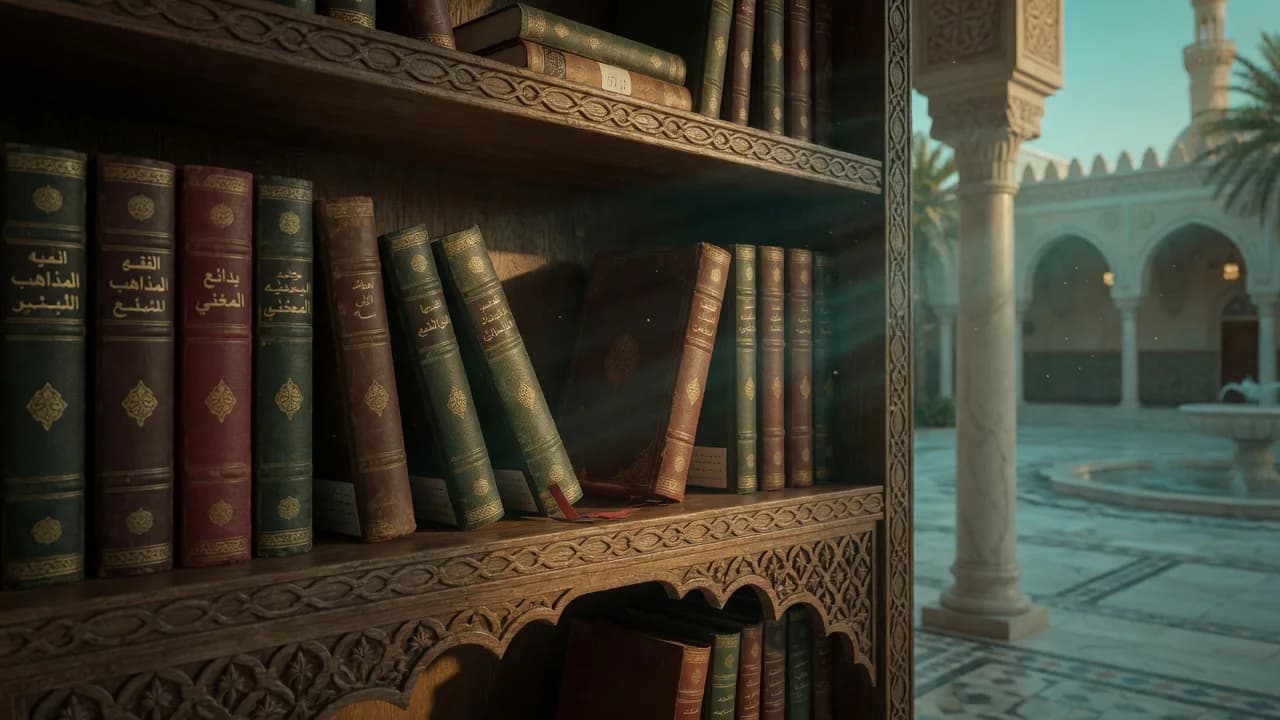
Fiqh is one of the fundamental disciplines that systematizes the rulings of Islam in the areas of worship (ʿibādāt), transactions (muʿāmalāt), and criminal law (ʿuqūbāt) in light of the Qur'an and Sunnah. In addition to acts of worship like prayer (ṣalāh), fasting (ṣawm), pilgrimage (ḥajj), and almsgiving (zakāh), topics such as trade, inheritance, marriage, and criminal law are also within the scope of Fiqh. This science, which directly shapes the daily lives of Muslims, brings great benefit at both individual and societal levels when learned correctly. In the DİDAR Academy curriculum, Fiqh texts are systematically studied, starting with al-Mabsūṭ by Sarakhsī and extending to Radd al-Muḥtār by Ibn ʿĀbidīn.
When beginning Fiqh studies, it is first necessary to acquire knowledge of uṣūl al-fiqh (principles of Islamic jurisprudence). Uṣūl al-fiqh examines how Fiqh rulings are derived from the Qur'an and Sunnah, and how proofs such as consensus (ijmāʿ) and analogical reasoning (qiyās) are used. Al-Pazdawī’s “Uṣūl al-Pazdawī” and Sarakhsī’s “Uṣūl al-Sarakhsī” are core resources for uṣūl al-fiqh education in the DİDAR curriculum. Reading Fiqh texts without knowledge of uṣūl can lead to memorizing rulings without understanding their rationale, which can prevent students from finding solutions to new issues.
Classical Fiqh texts are written within the frameworks of different methodologies and schools of thought (madhhabs). Among the foundational texts of the Hanafi madhhab are Sarakhsī’s “al-Mabsūṭ,” Kāsānī’s “Badāʾiʿ al-Ṣanāʾiʿ,” Marghinānī’s “al-Hidāyah,” and Ibn ʿĀbidīn’s “Radd al-Muḥtār.” In the DİDAR curriculum, students read these sources sequentially; each year, they explore different dimensions of Fiqh through a different text. In the fourth year, comparative Fiqh studies across madhhabs, using Mahmûd Şeltût’s “Mukâranetü'l-Mezahib,” are also included in the curriculum.
The discipline of text reading in Fiqh courses consists of the following stages: first, the text is silently studied; then, it is read and discussed under the guidance of the instructor; finally, the student records the evidence, rationale, and differing opinions for the ruling in their notes. This process transforms the student into a scholar who not only memorizes rulings but also grasps the logic behind them. Especially when faced with contemporary Fiqh issues, knowledge of uṣūl and experience in text reading help the student make sound judgments.
Today, various summarized and translated works related to Fiqh are available. These can be useful for gaining practical knowledge; however, true depth is acquired through direct reading of classical texts. Furthermore, a large majority of the fatwas and opinions circulating online lack a foundation in uṣūl and classical texts. DİDAR Academy’s emphasis on classical texts in Fiqh education ensures that students acquire a reliable Fiqh background based on trustworthy sources.
The comparative method in Fiqh texts is also taught to the student. Witnessing how different scholars approach the same issue prevents the student from adhering to a single opinion and enhances their academic maturity. This method is particularly beneficial when studying voluminous works such as Bada'i al-Sana'i and Al-Hidayah.
The Contemporary Fiqh Issues and Fatwa Methodology courses, taught in the final year of the DİDAR curriculum, connect classical Fiqh knowledge with current issues. Students no longer merely learn past rulings but also how to approach newly emerging matters. Taqi Usmani's work, Usul al-Ifta wa Adabuh, teaches the discipline of issuing fatwas while instilling in students a sense of responsibility. This stage represents the period of maturity in the four-year Fiqh education.
To succeed in Fiqh, proficiency in Arabic, knowledge of Usul al-Fiqh (principles of Islamic jurisprudence), and regular text study are essential. In DİDAR's four-year curriculum, Fiqh and Usul al-Fiqh courses run in parallel; students learn both rulings and the methods by which these rulings are derived. The discipline of mütalaa (individual study) and müzakere (group discussion) also plays a central role in Fiqh classes. Students discuss difficult issues with their discussion group, grasping them from various perspectives.
In conclusion, Fiqh is the foundation of the practical dimension of Islam. Knowledge of Usul al-Fiqh, classical texts, and disciplined study—when these three elements come together, the student can correctly perform their acts of worship and generate sound solutions for issues in their daily life. DİDAR Academy offers this holistic approach to young people through its four-year curriculum.